Is Dry January Wetter in 2026?
Is Dry January Wetter in 2026?
A Look at 5 Years of Google Trends Data and Tips for Marketing During Slower Months
So the other day, I was on a Zoom call with Andrew, and the topic of Dry January got brought up. More specifically, we were asking each other whether we thought January this year was more “wet” or more “dry” than in previous years. Then, Andrew had the idea of pulling up some Google Trends data to see what some actual data could tell us. Initially, what we found was rather interesting. So, naturally, I went down the rabbit hole.
Here’s a brief analysis of the shifting popularity of “Dry January” and related terms over the last five years. Plus, a few quick tips and considerations for craft breweries marketing during typically slower months.
Dry January Search Volume is Waning
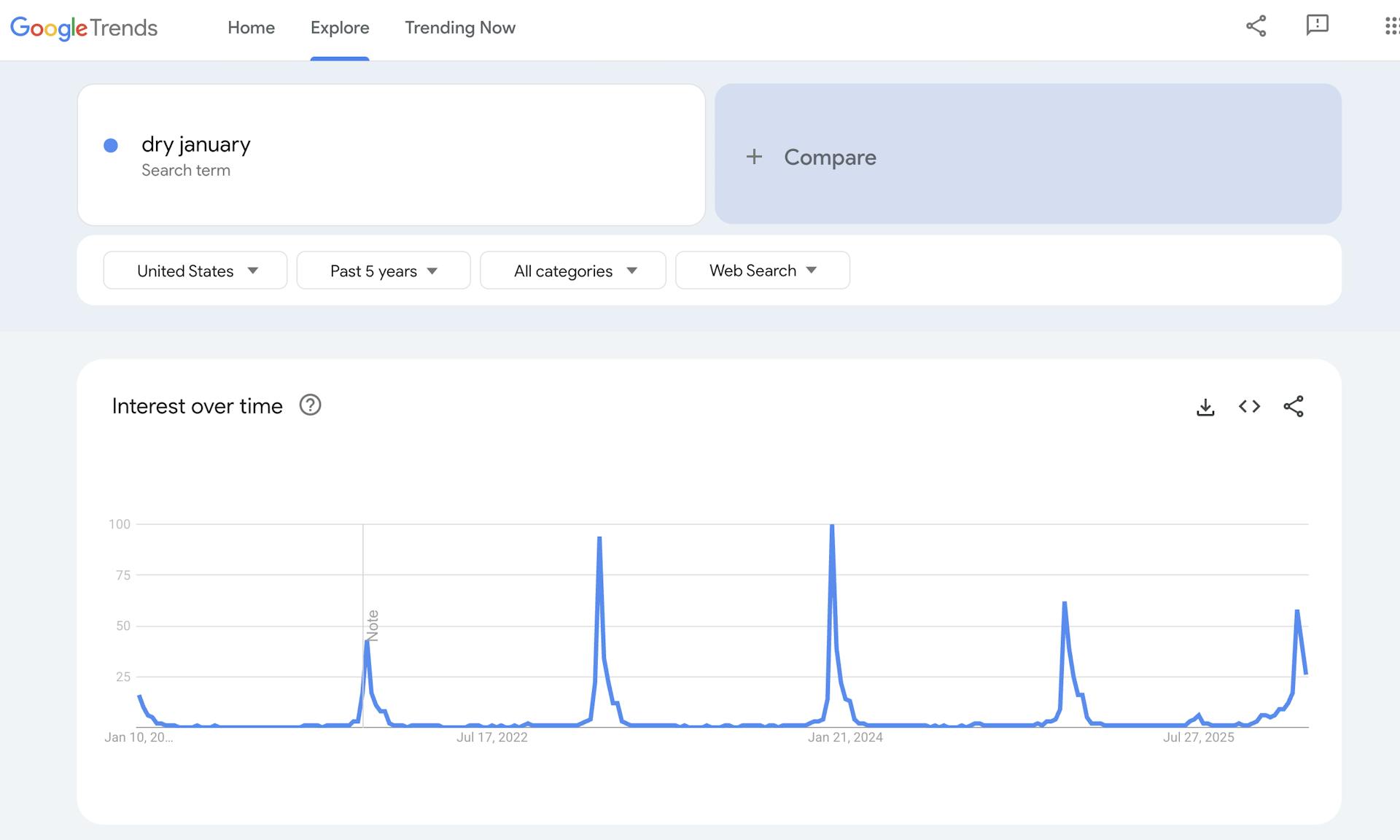
Search volumes for “Dry January” in the United States appear to show a trend of slowing interest:
- 2023 & 2024: These years saw the highest search volumes, with the peak occurring around the end of 2023 and January 2024.
- 2025: There was a notable drop-off in search volume compared to the 2024 peak.
- 2026 (So Far): Search volumes are currently the lowest they’ve been since 2022, showing a slight drop even from 2025.
The slowing search volume suggests that “Dry January” is less popular than in 2023 and 2024. While it could mean the trend is declining, it might also indicate that the term is now better known, leading fewer people to search for a basic definition.
To explore this further, we looked at related terms that suggest an alternative approach to abstaining.
Mocktail and NA Beer Terms Show Different Trajectories
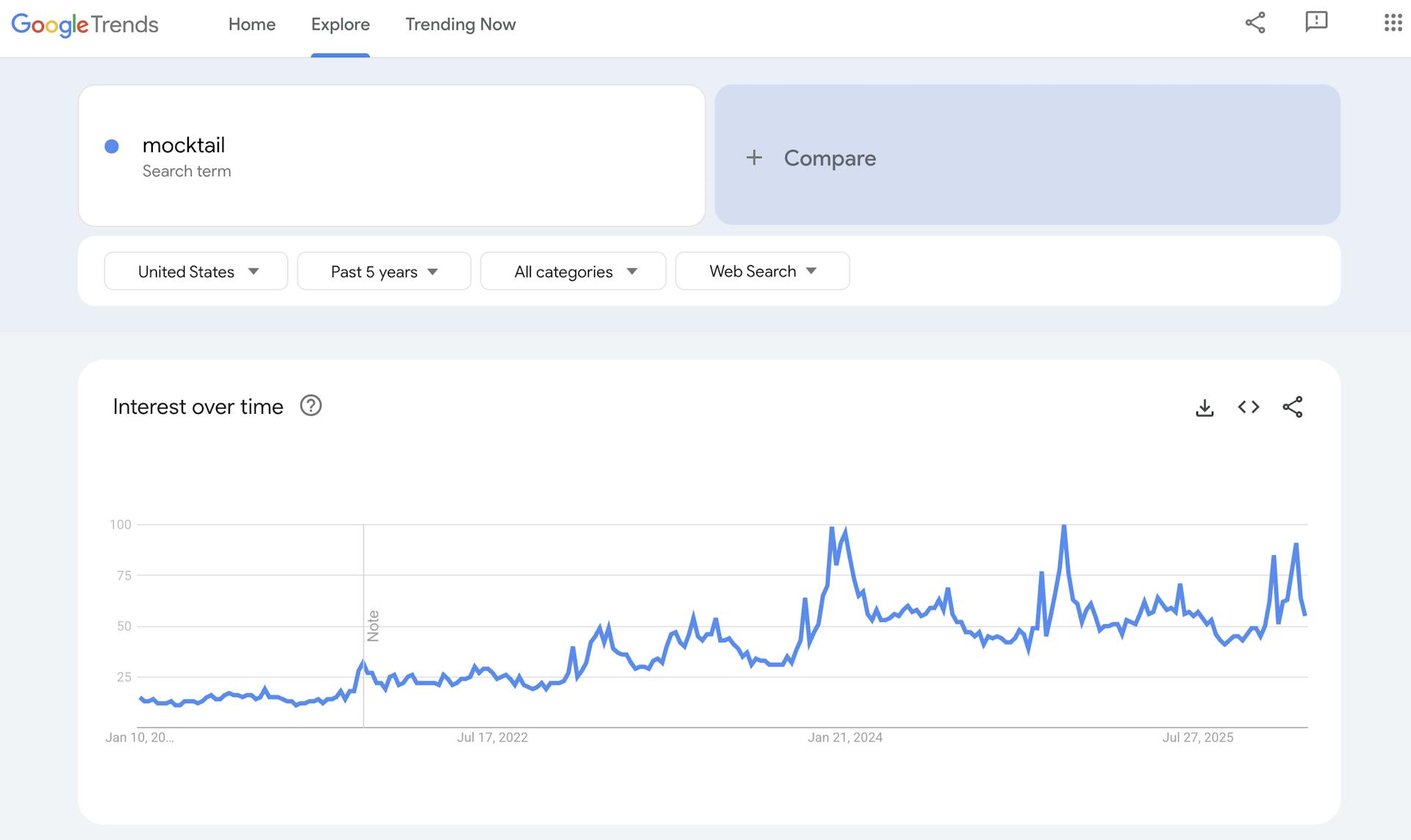
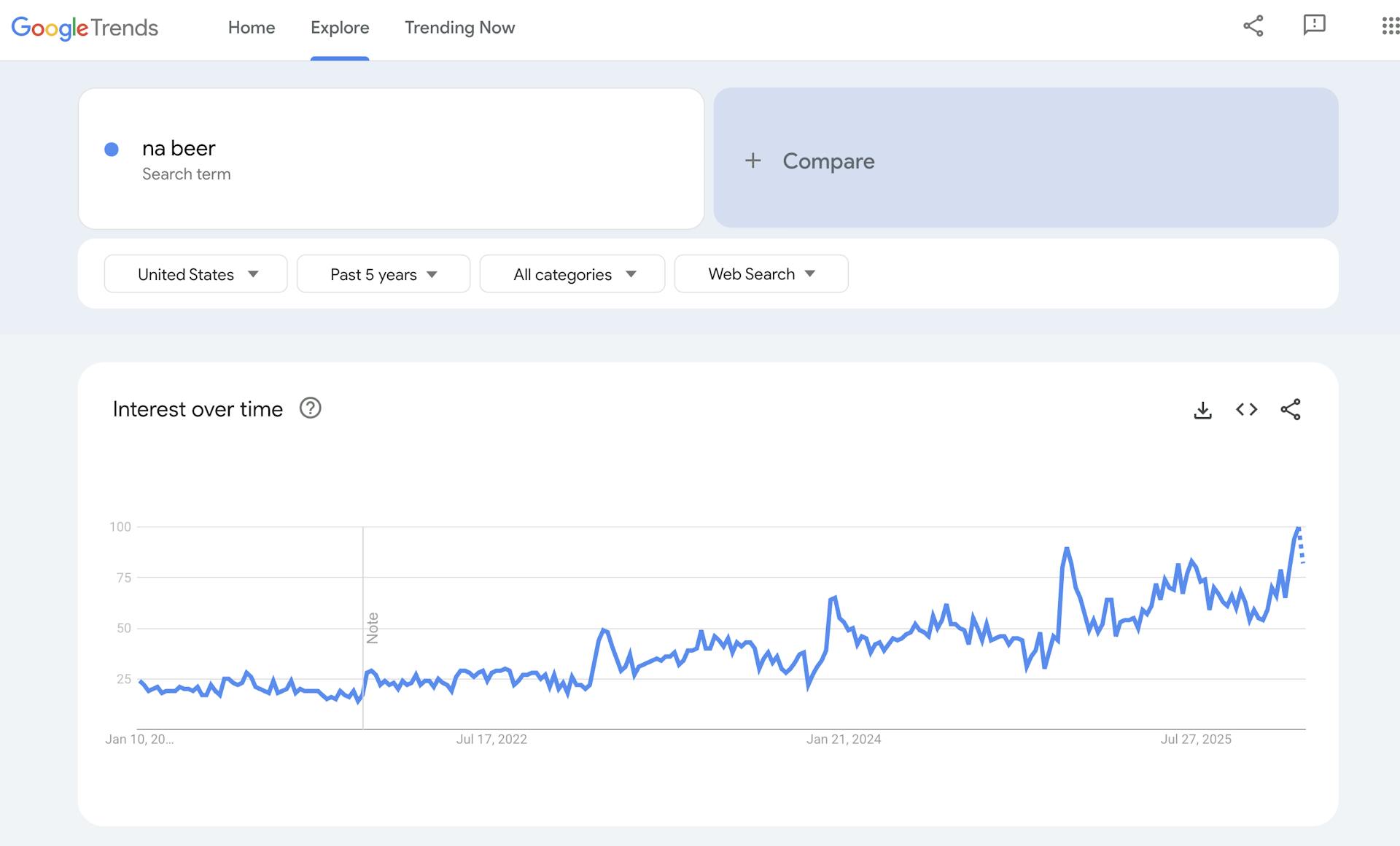
- Mocktail
-
-
- 5-year trend (starting in 2022)
- Steady increase year-over-year, with predictable January spikes
- Current 2026 Trend (Relative to Peak)
- Search volume has waned slightly in 2026 compared to the highest peak in 2025.
- 5-year trend (starting in 2022)
-
- NA Beer
-
- 5-year trend (starting in 2022)
- Steady increase year-over-year, with predictable January spikes
- Current 2026 trend (relative to peak)
- The peak for NA Beer search volume is this year (2026).
- 5-year trend (starting in 2022)
The continuing rise of “NA Beer” and “Mocktail” search interest suggests that while the concept of “Dry January” itself may be maturing or experiencing a slight decline, the interest in non-alcoholic alternatives is still on the rise, potentially shifting from the general movement to specific product searches.
Unfortunately, I don’t think the craft brewery industry is in for a massive windfall when it comes to January anytime soon. However, by understanding these trends, you can better prepare your business for slower periods.
With that in mind, here are some thoughts on what you can do during January, or other slow months for that matter.
Marketing Strategies for Craft Breweries During Slower Months
For businesses like craft breweries, periods of low demand, such as Dry January, require a strategic pivot in marketing efforts. Here are a few recommendations to effectively manage and market during these slower months.
1. Adjust Marketing Spend: The 10-5-3 Rule
Your marketing spend should reflect your revenue potential. We recommend the 10-5-3 rule as a guideline:
- 10% (Aggressive): Use for months or specific activations with high revenue opportunity (e.g., Oktoberfest, St. Patrick’s Day) or when you need to be aggressive due to market position (e.g., new business, highly competitive market).
- 5% (Mid-Tier): Use when you have a good market position, a strong following, or when the market opportunity is moderate.
- 3% (Slow Months): The lowest tier, suitable for months with less demand, like Dry January. You should be cautious about spending large amounts if demand-based market forces are working against you. The question to ask: “Would an aggressive spend actually move the needle?” If demand is low, spending less is often the best strategy.
2. Leverage Low-Cost, Owned Channels
During months where every dollar counts, lean heavily on channels you own, which are not dependent on social algorithms or high ad spend.
- Email Marketing
- SMS/Text Messages
- App Push Notifications (if you have an app)
These channels provide a direct, inexpensive line of communication to your most likely customers, those who have already opted in and are paying attention to your brand.
3. Reward and Focus on Loyalty Members
Think of January as “Loyalty Month.” Your loyalty members are key to keeping cashflow flowing during slow times.
- Offer Extra Incentives: Consider bonus points or future credits that can be used in subsequent, busier months.
- Drive Up Membership: Offer an incentive for new members to join your loyalty program (or mug club) in January.
- Acknowledge and Reward: Make sure your most loyal customers feel valued and are keyed into your offerings.
4. Focus on Alternative Offerings
Since a portion of the market is abstaining, it’s the ideal time to highlight non-alcoholic options and non-drink-related offerings:
- Non-Alcoholic (NA) Focus: Showcase your mocktails and NA beers. The rise in NA Beer search volumes confirms this is a relevant area of interest.
- Food/Restaurant Options: Highlight any food or restaurant options you offer.
- Delivery/Takeout: Especially in colder climates, emphasize delivery or takeout services. People are less likely to venture out but are happy to pay for the convenience of having food brought to them.
5. Tackle Long-Term Marketing Plays
Slower months often free up time to focus on long-term initiatives that are often neglected during busy seasons:
- SEO & Local SEO: Review your website’s Search Engine Optimization. Optimize existing content, check your local SEO, ensure your map pack is accurate, and verify business listings across platforms like Google Maps, Apple Maps, Yelp, and TripAdvisor.
- Public Relations (PR): Clean up your PR contact list, start conversations with press contacts, and plan your press release strategy for the year.
- Content Calendar Creation: Map out key promotions, activations, and product releases for the entire year to create a foundational content calendar.
- Content Drafting & Assets: Use the extra time to take high-quality photos of your product and taproom, and record evergreen video content that you can “set on a shelf” and use for your marketing throughout the rest of the year.
Staying Nimble in a Shifting Market
The data is clear: while the blanket term “Dry January” may be reaching maturity, the underlying interest in non-alcoholic alternatives is stronger than ever. For craft breweries, this period doesn’t have to be a washout. By shifting your focus from driving volume in a low-demand market to strengthening loyalty, optimizing owned channels, and tackling long-term strategic projects, you can transform a slow month into a period of essential preparation. Stay nimble, leverage the trends toward NA options, and use this time to build a stronger foundation for the profitable months ahead.
Cheers to a strategic and successful year!
Author: Chris Overly, Get Hoptimized