Get Excited for the CBP Fall 2026 Virtual Conference

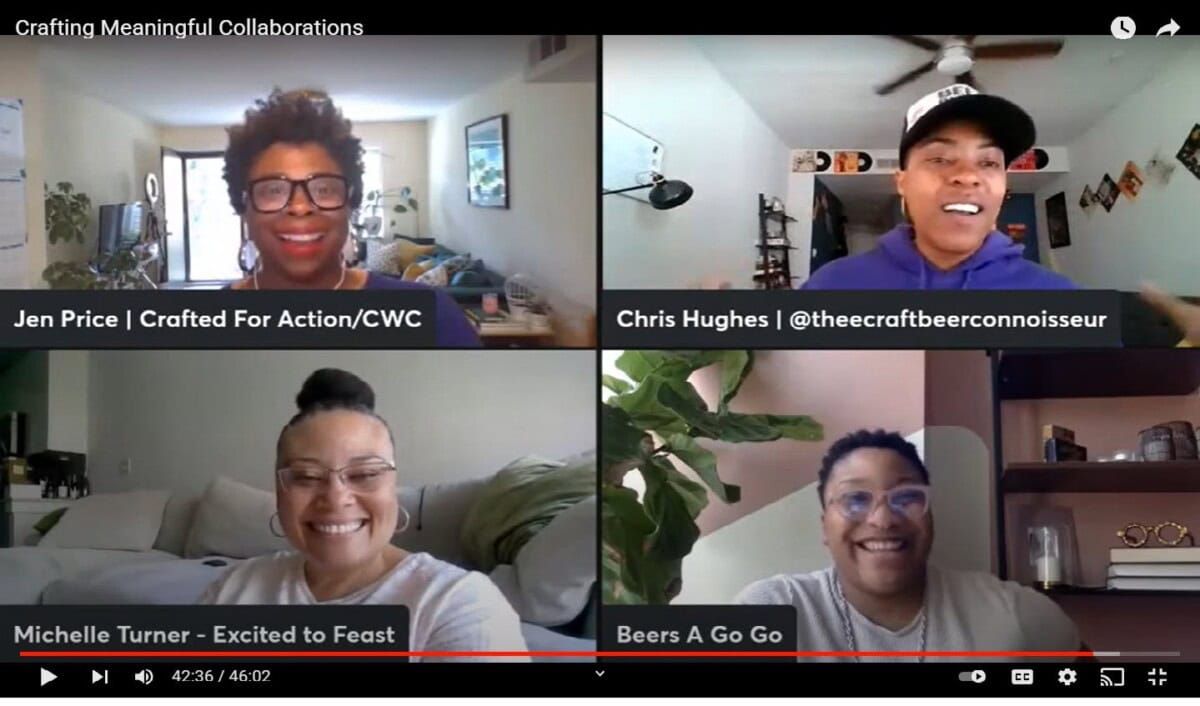
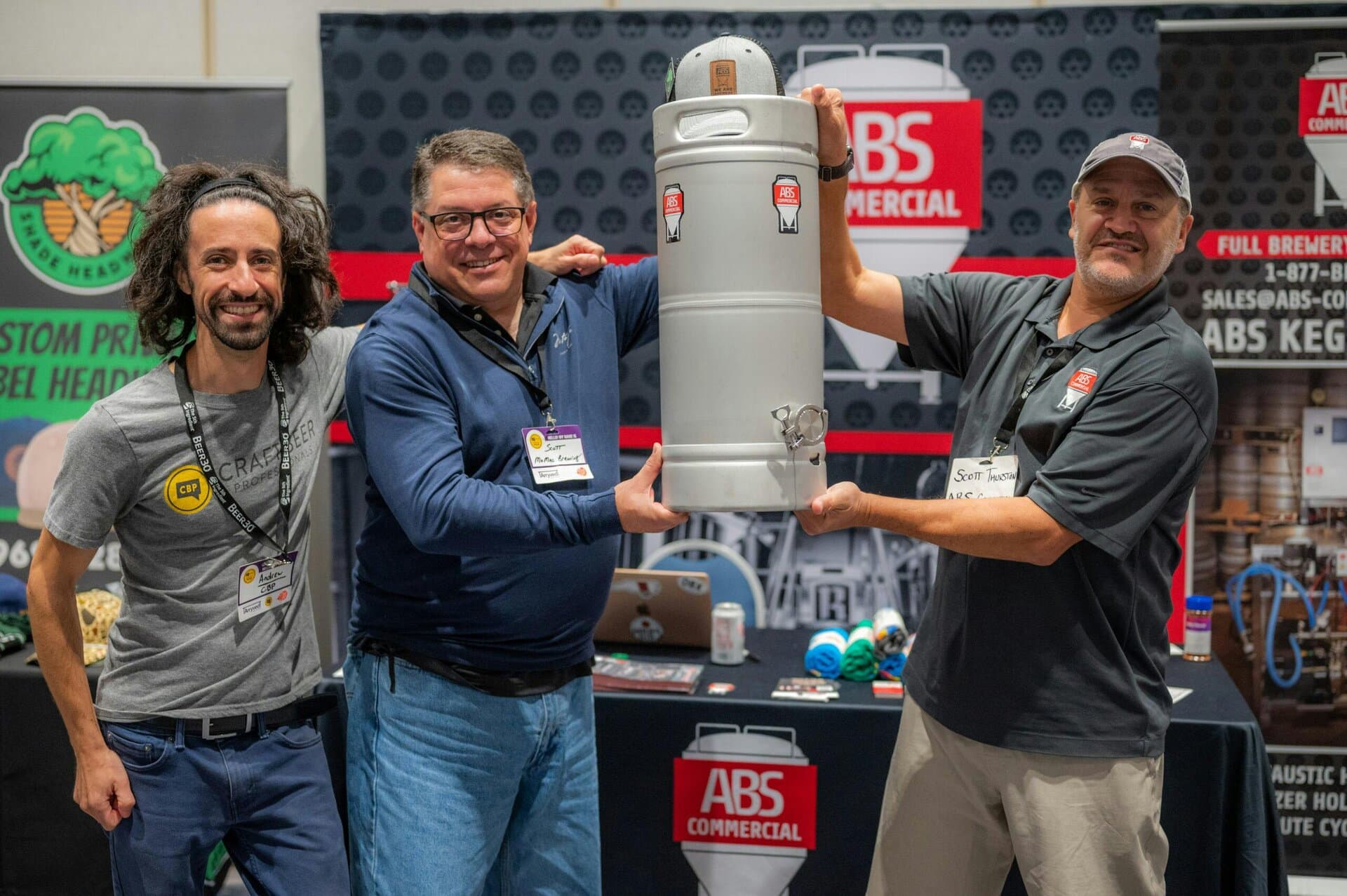
Not everyone has the opportunity to attend an in-person beer industry event, which is why we are proud to host two virtual conferences and make the content accessible to all. Pour yourself a cold one and enjoy our free educational sessions from the comfort of your own home, taproom, or brewhouse.

Thank you to our community of Craft Beer Professionals for your excitement, encouragement, and enjoyment of our event.

Huge thanks to Evently + Small Batch Standard

Full Schedule

For session details, click the buttons below.

All times ET. All sessions 45 minutes.

Monday, October 5

presented by Evently

Time (ET)

Monday, October 5
presented by Evently

11am

More from Your Taproom: Building a Successful Events Business w/Skyler Lewis (evently)

Private events can add a profitable, predictable revenue stream to your taproom, but only if they’re run like a business instead of an afterthought. In this panel, moderated by Skyler Lewis, Henceforth and Random Row share how they’ve grown their events programs alongside their everyday taproom business: how they price and package events, how they handle inquiries and bookings, how they staff and schedule without disrupting regulars, and what they’d do differently if they started over. Attendees will leave with practical ideas they can put to work right away, whether they’re hosting their first private event or looking to grow or optimize an existing program.

Skyler Lewis is the founder of Evently, a private event booking & management platform built for breweries and hospitality venues. Evently gives operators real-time availability, upfront pricing, and a booking process that turns inquiries into confirmed reservations without the back-and-forth. He presented at the 2026 Craft Brewers Conference in Philadelphia alongside brewery operators on how to build a private events revenue flywheel, and spends most of his time helping operators turn private events into their highest-margin revenue stream.

12pm

Beyond Water, Malt, Hops & Yeast: The German Purity Law Then and Now w/Jonas Trummer (Murphy & Son)

The German Purity Law (Reinheitsgebot) is arguably the world’s most famous brewing law, yet it is also one of the most misunderstood. Many brewers believe it simply limits beer to four ingredients—but the reality is far more complex.

This presentation traces the Reinheitsgebot from its origins in 1516 through centuries of legal and technological evolution to today’s German beer legislation. Participants will learn how the law adapted to scientific discoveries such as the role of yeast, the development of modern brewing technology, and European legislation.

The session will also provide a practical overview of what is—and is not—permitted in modern German brewing. Topics include brewing aids versus ingredients, enzymes, processing aids, finings, stabilization products, filtration media, specialty malts, hop products, and the differences between beers produced under the Reinheitsgebot and those brewed outside its scope.

Whether you brew in Germany or simply want to understand one of brewing’s most influential regulations, this session will separate myth from reality and explain how the Reinheitsgebot continues to shape brewing today.

Jonas Trummer is an Brewing Science – Alumni of the prestigious TUM-Weihenstephan. Additionally, he holds a PhD in Brewing Science from the Agricultural University in Krakow and the University Ghent. He has worked in breweries of all sizes in Germany, Poland and France. Since 2024, he is the Technical Sales Manager for Murphy and Son in Europe.

1pm

Return on Feelings – How Emotional Connection Drives Revenue in Craft Hospitality w/Ray Decker (Carvalicious Hospitality)

Most businesses measure return on investment. In craft hospitality, I believe the metric that matters most is one few operators ever track: Return on Feelings.

When guests feel a genuine emotional connection to your brewery, something changes. They stop acting like customers and start acting like regulars. They stay longer. They return more often. They spend more. They bring friends. They recommend your brewery without being asked. Over time, those individual moments compound into stronger loyalty, a more engaged community, and measurable business growth.

That’s what Return on Feelings looks like in practice. And it’s something every brewery can build, regardless of size, budget, or market.

In this session, I’ll share how intentional hospitality, thoughtful programming, team culture, and meaningful taproom rituals work together to create emotional connections that change guest behavior. Drawing from my experience at Avery Brewing Company, Lawson’s Finest Liquids, and other craft hospitality operations, I’ll show why the feeling guests leave with isn’t simply a byproduct of great service, it’s one of the most valuable advantages a brewery can build.

Attendees will leave with a practical framework for creating emotional connection intentionally, evaluating the moments that matter most in the guest journey, and making hospitality a competitive advantage that drives loyalty, reputation, and revenue.

Ray Decker is the founder of Carvalicious Hospitality, a craft hospitality consulting practice built around one outcome: Contagious Loyalty. He grew up in his family’s restaurant, spent four years in the United States Marine Corps, and has spent his career opening and leading craft hospitality operations across Colorado and Vermont.

At Avery Brewing Co., the team Ray built helped turn one of Boulder’s highest-volume taprooms into a local favorite known for hospitality guests remembered and returned for. That same approach to building culture, strengthening teams, and creating loyalty has shaped every operation since, most recently at Lawson’s Finest Liquids, where loyalty-member sales grew 84% in a single quarter.

Ray consults and speaks on one conviction: genuine human connection is the foundation of every loyal guest relationship.

2pm

Ask Your Brewery Anything: A Faster Way to Pull Answers From Your ERP w/Dustin Jeffers (Ekos)

Most breweries are sitting on years of production, sales, and inventory data. Very few have the time, or the tools, to turn that data into decisions. This session shows how MCPs are changing that, and how any brewery operator can start asking their own data questions in plain language and getting useful answers back.

Using an assistant like Claude connected to a brewery ERP, with Ekos as our working example, we’ll spend our time on the questions that actually move your business. Which SKUs are carrying your margin, and which are quietly losing money? Which accounts are ordering less than they did this time last year? Where are packaging or ingredient costs creeping up before they hit your bottom line? What should you brew more of next quarter, and what should you scale back?

Instead of exporting spreadsheets and building pivot tables, imagine typing a question and getting a clear answer in seconds, then using it to make a call the same day.

This will be an approachable walkthrough built for owners, operators, and brewers-–not software engineers. We’ll show real examples of the decisions that unlocks across margins, inventory, production planning, and sales, and give you a grounded sense of where to start finding growth in data you already have. All levels of experience welcome!

Dustin Jeffers is the Vice President of Brewery Product and Experience at Next Glass. He received his Bachelor’s Degree from the University of Connecticut and his Master’s Degree from Florida Atlantic University. He has been in the beer industry since 2012, working at Saltwater Brewery as the Head Brewer and Chief Operations Officer, and at 3 Sons Brewing Co. as the Director of Operations. Dustin has been a part of multiple aspects of the brewing industry, including brewing, front-of-house, sales, and operations. Dustin now works for Next Glass, Inc as the VP of Brewery Product, focusing on Ekos, Ollie, and all Next Glass has to offer for the beverage alcohol industry.

3pm

Beyond the Handshake: Building Your New Distributor Partnership for Revenue Results w/Joanne Newborn (Newborn Evolution LLC)

Landing a distributor is exciting—but many breweries quickly discover that signing the agreement is just the beginning.

In this session, you’ll learn how to approach a new distributor relationship as a true business partnership. We’ll explore what matters before the first case ships from setting expectations to aligning goals, and bringing the entire wholesaler team onboard. From there, Joanne will tackle how to consistently earn and keep share of mind in a competitive portfolio environment—what turns distributors off, what turns them on, and how to rise above the noise.

Whether you’re preparing to sign your first distributor or recently entered distribution or re-energizing a dormant one, you’ll leave with practical tools to build stronger relationships, avoid common mistakes, and give your brand the best chance to succeed in today’s landscape.

You will hear real success stories, avoid common pitfalls, and walk away with clear tactics to:

-Position your brand as a high-value partner from day one

-Gain and sustain distributor mindshare in practical, measurable ways

-Navigate and resolve conflict while preserving trust and momentum

-Make every distributor meeting matter—with the right people, timing, and purpose

Joanne Newborn spent over two decades in the Beer, Wine & Spirits business in sales, marketing, strategy and distributor management, building and leading teams across North America. She has held roles at Diageo, William Grant & Sons, Banfi Vintners, Concha y Toro, Distell, and Mike’s Hard.

In 2018 she became a Certified Executive Leadership Coach and founded her company, Newborn Evolution, that partners with smart leaders to build teams that think strategically, problem-solve effectively and take true ownership of their outcomes. She and her team of exemplary coaches, consultants and trainers have worked with over 100 organizations in 50 countries around the globe, building leaders and high-impact teams from individual contributors to the C-suite.

Her 4 time award winning company is a proud Silver Associate Member of the Wine & Spirits Wholesalers of America; a Corporate member of Women of the Vine & Spirits; a member of the Brewers Association and the Garden State Winegrowers Association. She brings her knowledge and expertise in the alcohol beverage industry to beer, wine and spirits, supplier and distributor clients.

Joanne frequently speaks at conferences and universities, as well as, being an author in various publications. She is an International Course Developer and Subject Matter Expert (SME). She earned her MBA from Penn State University with Beta Gamma Sigma Honors; has her ACC credential with the International Coaching Federation; is a Certified DiSC Practitioner; and a Certified Diversity, Equity & Inclusion Coach.

Gratitude is her Attitude

4pm

Fermentable Sugars as the Missing Control Parameter for Hop Creep w/Maciej Grajewski (Beer-o-Meter)

Hop creep remains one of the most underestimated and poorly controlled risks in modern hop-forward beer production. Late and dry hopping introduces active enzymes, primarily amyloglucosidases, that convert previously unfermentable dextrins into fermentable sugars after primary fermentation appears complete.

This secondary digestion can reactivate yeast metabolism, leading to unexpected over-attenuation, refermentation in package, elevated CO₂ levels, flavour instability, and reduced shelf life.

Traditional brewery control tools such as density, apparent extract, and alcohol measurements are fundamentally blind to this process. These methods assume that fermentable sugars are depleted once final gravity is reached and therefore fail to detect newly generated fermentables originating from dextrin breakdown.

This contribution presents fermentable sugar testing as an innovative and game-changing approach for truly monitoring and controlling hop creep. Using the Beer-o-Meter platform, fermentable sugars can be measured directly and selectively in real time, independent of non-fermentable carbohydrates.

Case examples demonstrate how fermentable sugar profiles evolve after dry hopping, even when density remains unchanged. By integrating fermentable sugar data into fermentation and packaging decisions, brewers can accurately assess refermentation risk, determine safe cold-crash and packaging windows, and significantly improve product stability and shelf-life predictability.The results underline that fermentable sugar analysis is not merely an additional quality parameter, but the only reliable method to close the critical blind spot left by conventional measurements.

Maciej Grajewski is a Polish biotechnologist currently based in the Netherlands. He holds a PhD in microfluidics from the University of Groningen, where he specialized in developing precise and scalable analytical solutions. With a strong background in biotechnology and a passion for applying advanced diagnostics to real-world brewing challenges, he founded Beer-o-Meter to bring laboratory-grade quality control tools directly into craft breweries. His work bridges cutting-edge biotechnology and practical brewing needs, enabling scalable sugar management and improved process stability.

5pm

Beer break

Tuesday, October 6

presented by Small Batch Standard

Time (ET)

Tuesday, October 6
presented by Small Batch Standard

11am

Hospitality: A Key Ingredient for Brewery Success w/Benjamin Pare (Two Roads Brewing Co.)

Breweries devote tremendous attention to brewing exceptional beer, yet one of the greatest opportunities for growth often lies in creating the guest experience that surrounds it. This session explores practical, scalable approaches for designing exceptional experiences that foster guest loyalty, strengthen team engagement, and support long-term business growth.

Drawing from real-world experience leading hospitality across a multi-venue brewery campus, attendees will learn repeatable frameworks for creating memorable first impressions, empowering staff to deliver authentic hospitality, developing training programs that reinforce culture, recovering service failures with confidence, and measuring the impact hospitality has on retention and brand advocacy.

Designed for brewery owners, operators, taproom managers, and hospitality leaders, this presentation focuses on actionable ideas that can be implemented immediately, regardless of brewery size or staffing model. Participants will leave with practical tools, proven operational strategies, and a fresh perspective on one of the industry’s most underutilized competitive advantages.

Great beer creates the opportunity for a memorable visit. Thoughtful hospitality is what turns that visit into a lasting relationship.

Ben is the Director of Hospitality at Two Roads Brewing Company, where he leads hospitality operations across multiple taprooms, event spaces, bars, culinary programs, and retail experiences. Before joining Two Roads, he spent more than a decade building his career in luxury hotels, acclaimed restaurants, and hospitality-driven brands throughout New York and Miami. That diverse background shaped his approach to guest experience, operational excellence, and team development. His work has been featured in The New Brewer, where he wrote Hospitality: The Overlooked Ingredient in Brewery Success. Today, he is passionate about helping breweries elevate hospitality into a measurable competitive advantage through thoughtful leadership, intentional systems, and memorable guest experiences.

12pm

From Options to Answers: How AI Drives Traffic to your Tasting Room w/Scott Kolbe (Market Your Craft)

Al has shifted the playing field. The craft beverage industry has been adapting to change for decades: absorbing the rise of e-commerce, surviving the consolidation of distributors, and watching social media rewrite the rules of brand discovery one algorithm update at a time. Each shift required new thinking. Some producers led. Most followed. A few didn’t make it. What is happening right now with Artificial Intelligence resembles those earlier disruptions. But it is different in speed. And in the way it is quietly repositioning itself between your brand and the drinker who might otherwise walk through your front door. To show up meaningfully in Al Search results, producers should focus on the signals that reflect credibility and authority to Al models, including describing your space, promoting your events, adding FAQs, asking for reviews, writing press releases, and others. We’ll help you control the Al narrative about your brand and share best practices outlined in our complimentary Guide for attendees titled, “Answer Engine Optimization (AEO): 10 Tactics In 10 Days For Showing Up In Al Search.”

We started Market Your Craft to help small-to-mid-sized producers quickly adapt to the changing Marketing landscape with storytelling. Because we believe every craft brand has an exciting story to share. Led by Scott Kolbe, we’re a team of dreamers and doers, passionate about all things beverage with the creds to match. We’ve created a series of Workshops, Guides, and tools to help cut through the clutter with high-performance marketing. To partner on a project or to try our Beverage AI, visit marketyourcraft.com.

1pm

The Rules for NA Beer w/Alex Koral (Sovos ShipCompliant)

For craft breweries looking for new sales opportunities, the non-alcoholic (NA) beer market can be extremely attractive, as consumers increasingly want NA options but still crave the atmosphere and taste profiles that only their favorite craft brewers can provide.

But just because the market is there doesn’t mean you can simply jump in headfirst: even though NA beer is by definition “”non-alcoholic,”” there are still plenty of rules and regulations to be aware of, affecting licensed production facilities, labels, and where to sell.

Join Alex Koral, regulatory general counsel for Sovos ShipCompliant, as he reviews the various federal and state laws governing NA beer and lets you know what to watch out for as you prepare to join the NA market.” Based in Boulder, Colorado, Alex Koral is Regulatory General Counsel for Sovos ShipCompliant, where he serves as lead legal researcher for beverage alcohol regulation and has become a leading expert on interstate distribution of alcohol. He has spoken on the topic at many industry events including the Craft Beer Professionals Virtual Conferences, Craft Brewers Conference, American Craft Spirits Association Convention, as well as meetings for the National Council of State Liquor Administrators and the National Liquor Law Enforcement Association. Alex has been in the beverage alcohol arena since 2015, after receiving his J.D. from the University of Colorado Law School.

2pm

Used Equipment Done Right: Capacity, Cost, and Fit Before the Bid w/First Key Consulting

With brewery closures and shifting market conditions creating more opportunities in the used-equipment market, many brewers are asking the same question: is that auction deal a smart growth move, or the start of an expensive integration problem? This session will help brewery owners, operators, and production leaders evaluate used brewhouse, cellar, packaging, and utility equipment through a practical, capacity-first lens. Rather than chasing bargains, attendees will learn how to connect equipment decisions to real production needs, operating constraints, layout realities, utility capacity, total landed cost, and long-term scalability. The presentation will walk through common pitfalls including technology mismatch, missing automation support, unreliable maintenance history, access and footprint issues, rigging surprises, and hidden refurbishment costs, showing how early planning can reduce risk before a bid is placed. Using real-world integration case studies, including a used brewhouse project and a can filler evaluation, the session will highlight the difference between apparent value and true total cost of ownership. Virtual attendees will leave with a practical framework for defining capacity needs, talking to OEMs before purchase, inspecting equipment properly, confirming facility fit, budgeting contingencies, and sequencing equipment additions strategically. The goal is simple: help breweries capture the cost, lead-time, and sustainability benefits of used equipment without inheriting someone else’s operational headaches.

Kayla Johnson is Senior Advisor, Engineering Services at First Key Consulting, bringing more than 15 years of engineering and brewing industry experience. She supports clients with process, packaging, and utilities engineering; capital project management; and operational excellence. Before joining First Key, Kayla held several leadership roles at Anheuser-Busch InBev, including Senior Quality Assurance Manager, Resident Engineer, Director of Learning & Development for Supply Chain, and Assistant Brewmaster. Her experience spans food safety, internal and external quality, powerhouse operations, facilities, maintenance, IT, capital projects, employee capability building, and large-scale brewery operations. She has led teams across major North American facilities, supported greenfield brewery design, launched new brands, and contributed to equipment installation, testing, and start-up. Kayla holds a Bachelor of Science in Chemical Engineering, Cum Laude, from the University of North Dakota, along with Six Sigma and Learn2Serve certifications. Outside work, she volunteers in her community and enjoys fitness, travel, cooking, and pickleball.

Garrett Meier is Vice President Brewery Operations at Full Sail Brewing where he is responsible for leading brewery performance and operational execution. Prior to Full Sail, Garret was 10 years at Anheuser-Busch, supporting the North American brewery network, including sustainability efforts across 18 breweries focused on energy, water, carbon reduction, and capacity management. He also led beyond beer supply initiatives, including co-manufacturing network development, new brand integration, and the successful scaling of ready-to-drink products within a large production system. Earlier roles gave him direct responsibility for production teams, engineers, process managers, technicians, operators, budgets, P&L performance, and maintenance strategy. Garrett earned a Bachelor of Science in Industrial and Manufacturing Systems Engineering from the University of Missouri-Columbia. His professional credentials include Certified Cicerone, Advanced Cicerone, Agile Scrum Master, Lean Six Sigma Green Belt, and Brewing Diploma certifications. Garrett enjoys exploring the craft and culture of beer and spending time in the outdoor community around Hood River.

Mike Gerhart is Senior Advisor, Technical Services at First Key Consulting, where he works with breweries on quality and process optimization initiatives. His work includes operational oversight and management support, developing reporting metrics and SOPs, supporting employee development, and contributing to business plans and feasibility studies. Mike partners with both start-up and established brewery clients on facility design, equipment procurement, construction oversight, operational readiness, and commissioning. He also supports new product innovation, process upgrades, the development and implementation of education and training programs, and provides expert witness services related to brewery operations, quality, and process performance. Prior to joining First Key, Mike accumulated more than 20 years of experience working with breweries including Hill Farmstead, Dogfish Head, Otter Creek, and Coors. At Hill Farmstead, he served as Chief Operating Officer, during which time the brewery consecutively earned the distinction of Best Brewery in the World from RateBeer.com. Mike obtained his Master of Brewing from the Versuchs- und Lehranstalt für Brauerei (VLB) in Berlin and holds an undergraduate degree from Johnson State College in Vermont. Outside of First Key, Mike enjoys spending time with his two daughters, snowboarding, being outdoors, and enjoying a good beer at the end of the day.”
3pm

Beer Break

4pm

Building a Brewery Merch Program That Actually Drive Sales W/Andrew Reinitz (Innovative Marketing Consultants)

Most breweries have accumulated a collection of branded merchandise and point-of-sale materials over the years. A few tap handles here, some glassware there, koozies for one event, t-shirts for another. Before long you’ve got a little bit of everything, but no real strategy behind it.

This session is all about building a branded merchandise and point of sale mix that supports your sales and marketing goals instead of just adding more stuff. We’ll look at how to choose the right products for taprooms, bars, retail accounts, festivals, distributor programs, and seasonal promotions, along with some of the common mistakes breweries make when buying promotional items.

You’ll leave with a simple framework to help evaluate what you already have, identify gaps, and make smarter purchasing decisions going forward. Whether you’re building your first branded merchandise lineup or looking to get more out of the one you already have, you’ll walk away with practical ideas you can start using right away.

Andrew Reinitz has spent more than a decade helping breweries and beverage brands build branded merchandise and point-of-sale programs that support sales, strengthen distributor relationships, and increase brand visibility. Working with breweries of all sizes across the country, he’s seen what works, what doesn’t, and where companies often spend money without getting the return they expected.

He’s passionate about helping breweries think more strategically about branded merchandise, making sure every marketing dollar goes a little further. Andrew enjoys sharing practical ideas that breweries can put to use right away, helping them make smarter merchandising decisions and get more value from their marketing budgets.

5pm

Making Sense of Your Production Numbers: Cut Costs and Waste Without a Data Scientist W/Magnus Valmot (PLAATO Technologies)

For decades, the kind of production intelligence that keeps a facility running smoothly – real-time equipment monitoring, automated alerts, cross-batch data analysis – was the exclusive domain of the world’s largest breweries, the ones with the budgets and dedicated data teams to match. That’s changing. This session looks at how a new generation of accessible technologies (yes – AI included!) is finally bringing that same capability within reach of breweries of any size, and why you no longer need to be a data scientist to make sense of it.

We’ll explore what becomes possible when the data trapped across your PLCs, spreadsheets, lab results and paper logs is finally brought together in one place and given proper production context. The result is a single, understandable overview of what’s actually happening across your production floor – and your ability to act on it before small problems turn into expensive ones.

The talk centres on three practical ways this saves time, cuts costs and reduces waste: monitoring equipment performance to catch issues early and reduce unplanned downtime; using timely alerts on off-target parameters to rescue batches while there’s still time; and surfacing inconsistencies across batches and processes early enough to actually do something about them. Throughout, the emphasis stays on the operator, not the algorithm – with practical examples of how better visibility translates directly into a healthier bottom line. Whether you run one site or several, you’ll leave with a clear sense of what’s now within reach.

Magnus Valmot is the CEO of PLAATO, where the team helps breweries bring their production data together and make sense of it. An entrepreneur for over a decade, he has spent his career building hands-on technologies from the ground up, and is passionate in equal measure about process improvement, technology development, and building great teams. Lucky for him, PLAATO sits right at the intersection of all three.

Register Now for CBP Connects Tampa (Dec. 7-9, 2026)